

Lawyers, Tears & WTF Moments
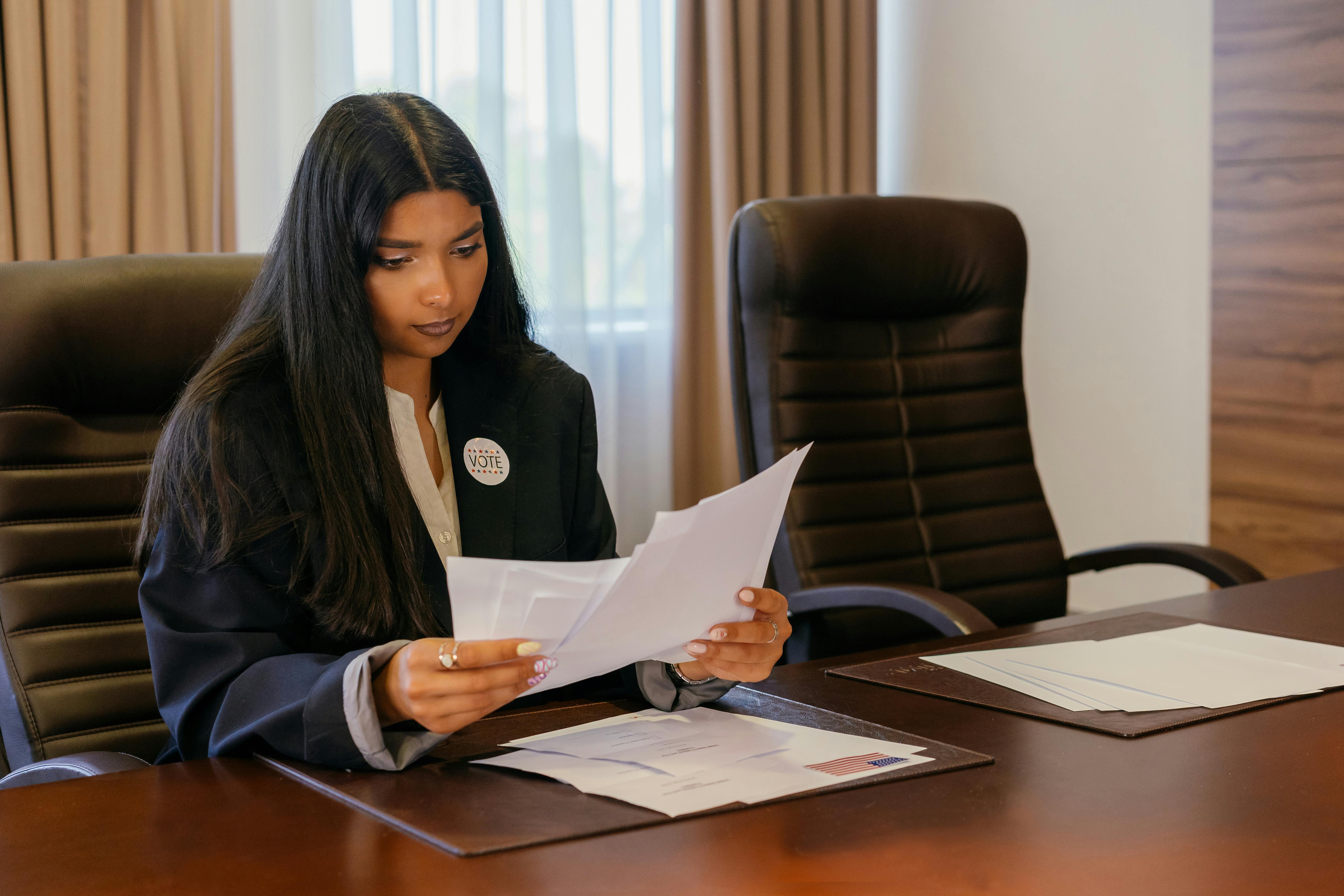
Photo Credit: Mikhail Nilovvia Pexels
“The human mind always makes progress, but it is progress in spirals.” – Madame de Staël
Why Smart Women Go Blank During Divorce Meetings
One of the most frustrating things about being human is that our best thinking rarely seems to happen when we actually need it.
The perfect comeback arrives three hours after the argument is over.
The brilliant question you should have asked doesn't show up until you're unloading groceries.
And the boundary you wish you had set suddenly appears while you're standing in the shower wondering why your brain couldn't have been quite so helpful the day before.
I have a name for that.
I call it the grenade effect.
The conversation ends, everyone goes home, and then your brain casually lobs the perfect response over the fence long after it would have been useful.
Most of us have experienced some version of it. It happens after:
job interviews
medical appointment
difficult conversations with family members
arguments with friends.
Even those moments when someone says something mildly irritating and you don't think of the witty comeback until two days later.
It's annoying, but it's also remarkably human.
The reason I'm bringing it up today is because divorce introduces a close cousin to the grenade effect. One that isn't nearly as funny.
Instead of walking away and thinking of something better to say, you walk away wondering what just happened.
You sit in your car, staring at the steering wheel and replaying the conversation in your head while shuffling through your notes. And somewhere in the middle of all that, a thought lands:
What the hell just happened in there?
That's what I call the WTF moment.
If you've ever left a lawyer's office feeling confused, overwhelmed, emotional, or strangely blank, you know exactly what I'm talking about.
And contrary to what many women assume, it usually has very little to do with intelligence, preparation, or capability. But it has everything to do with what happens when your brain is trying to process too much at once.
Think about what you're bringing into that room — grief, financial uncertainty, fear of making the wrong decision, and a future that may look nothing like the one you planned.
On top of that, you're expected to absorb unfamiliar legal language, understand complex options, evaluate consequences, and make decisions that could affect the rest of your life.
That's a lot for anyone to carry.
When our brains perceive a situation as threatening, stressful, or overwhelming, they become less concerned with deep analysis and more concerned with getting through the moment.
Not because we're incapable, but because we're human.
In practical terms, that means it becomes harder to:
retain information
formulate questions
challenge assumptions
think strategically
advocate clearly for ourselves
It's a bit like trying to read a book while someone is setting off fireworks beside your head.
You might catch some of it. You might even catch most of it. But your processing ability isn't operating at its usual capacity.
And that's where the WTF moment is born.
The meeting ends. The pressure eases. The perceived threat begins to subside. Then your brain starts reclaiming resources that were busy dealing with stress.
And suddenly the grenade effect arrives:
The question you forgot to ask.
The point you wish you had challenged.
The detail that suddenly doesn't make sense.
The concern you couldn't quite put your finger on while you were sitting in the room.
Nothing about your intelligence changed between the lawyer's office and the parking lot. Your brain simply had room to think again.
During my career in the corporate world, this is one of the reasons I give candidates homework after job interviews.
By the time an interview is over, they've spent an hour trying to make a good impression, answer questions thoughtfully, manage nerves, and process information about the role.
That's a lot happening simultaneously, so I don't always learn the most about someone during the interview itself. Sometimes I learn the most after they've had a chance to think.
I'll ask them to go home and tell me why they're the right person for the role.
Not the polished version. Not the cover-letter version. The real version. The one that arrives after they've had time to process.
The responses that come back are almost always better.
Not because they suddenly became more qualified, but because they finally had room to think.
Divorce deserves the same grace.
One of the simplest tools I've found for reducing overwhelm during legal meetings is deciding on one outcome before you walk through the door.
Not ten questions. Not an entire notebook of concerns.
One outcome.
Finish this sentence:
I need to leave today understanding...
That's it.
Write it down on paper. Yes, paper.
Paper doesn't disappear behind notifications.
Paper doesn't tempt you into checking email.
Paper sits in front of you and quietly reminds you why you're there.
When the conversation starts to drift… that sentence becomes your anchor.
When the legal jargon starts flying… that sentence becomes your anchor.
When overwhelm starts creeping in… that sentence becomes your anchor.
And if you reach the end of the meeting without understanding the thing you came to understand?
That's important information. Because the goal isn't to leave the meeting with all the answers, it’s to leave the meeting with clarity about the answer you needed most.
The women I work with are often surprised to discover that the problem wasn't that they were too emotional, too unprepared, or somehow bad at advocating for themselves. The problem was that they were trying to think clearly while carrying the emotional weight of an entire life transition.
Those are very different things.
So if you find yourself sitting in the parking lot after a lawyer meeting, staring into space while your brain suddenly starts producing questions, observations, concerns, and responses that would have been really useful twenty minutes earlier… you’re in good company.
It's annoying as hell, but at least now you know it’s not just a “you” thing.
Not signed up for the newsletter yet?
Click here to have it delivered right to your fingertips!
